B&N Pro Membership

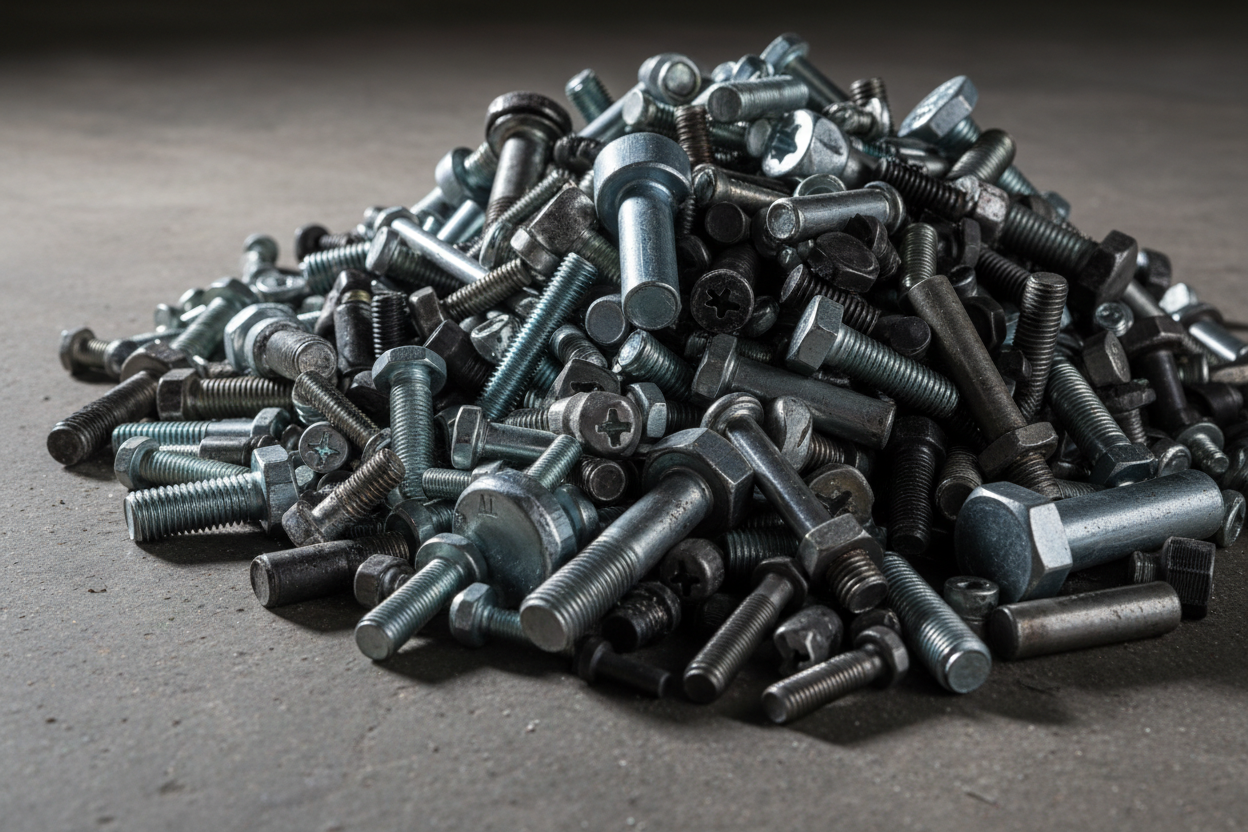
With so many fastener options in the market, selecting the right bolt for your application requires understanding both form and function. Each bolt type is engineered for specific load conditions, materials, and installation methods—and the wrong choice can compromise safety and performance.
This guide walks you through the most common bolt types, their practical applications, and the selection criteria that matter for industrial and construction work.
Common Bolt Types and Their Applications
Below are the fasteners you'll encounter most often in structural, mechanical, and assembly work.
Hex Bolts
The workhorse of fastening. Hex bolts feature a six-sided head designed for wrench or socket engagement, making them reliable for high-torque applications.
Typical applications:
- Structural steel connections
- Machinery assembly and repair
- General construction and fabrication
Their standardized geometry and wide availability make them the default choice for most industrial fastening tasks.
Carriage Bolts
Carriage bolts combine a smooth, domed head with a square neck that seats into wood, preventing rotation during installation. This design eliminates the need for a wrench on the head side.
Typical applications:
- Wood-to-wood connections
- Furniture assembly and repair
- Deck and timber framing
Lag Bolts (Lag Screws)
Heavy-duty fasteners with a tapered, threaded shaft and hex head. Lag bolts bite directly into wood without requiring a pre-drilled hole, delivering exceptional holding power in structural applications.
Typical applications:
- Wood framing and structural connections
- Deck ledger boards and posts
- Load-bearing timber projects
Eye Bolts
Eye bolts feature a looped head designed for rope, cable, or chain attachment. They're engineered for lifting and rigging operations where directional load control is critical.
Typical applications:
- Rigging and lifting operations
- Cable and rope anchoring
- Equipment suspension and securing
U-Bolts
U-shaped fasteners that wrap around pipes, tubing, or round stock. The two threaded ends accept nuts, creating a secure clamp without drilling through the object being secured.
Typical applications:
- Pipe and conduit support systems
- Automotive suspension and exhaust mounting
- Equipment and machinery mounting
Anchor Bolts
Anchor bolts are embedded in concrete during the pour, with the threaded end protruding to accept nuts and washers. They provide the foundation connection for structural steel, machinery bases, and equipment supports.
Typical applications:
- Concrete foundation connections
- Structural steel base plates
- Equipment and machinery anchoring
Shoulder Bolts
Also called stripper bolts, these fasteners feature a smooth, unthreaded shoulder between the head and threads. The shoulder acts as a precision bearing surface for rotating or pivoting assemblies.
Typical applications:
- Machinery pivot points and hinges
- Moving assemblies and linkages
- Precision mechanical connections
Bolt Selection Reference Chart
| Bolt Type | Primary Use | Material Compatibility |
|---|---|---|
| Hex Bolt | Structural and general fastening | Steel, metal |
| Carriage Bolt | Wood connections | Wood, composite |
| Lag Bolt | Heavy-duty wood fastening | Wood, timber |
| Eye Bolt | Lifting and rigging | Steel, stainless |
| U-Bolt | Pipe and tubing support | Steel, stainless |
| Anchor Bolt | Concrete embedment | Steel, stainless |
| Shoulder Bolt | Precision machinery | Steel, stainless |
Key Selection Criteria
Choosing the correct bolt requires evaluating several factors:
- Material grade: Steel, stainless steel, and alloy bolts offer different corrosion resistance and strength profiles. Outdoor and wet environments demand stainless or galvanized options.
- Strength class: Bolt grades (measured in metric or SAE standards) indicate tensile strength. Verify that your fastener meets or exceeds the load requirements of your application.
- Environmental exposure: Corrosive environments, temperature extremes, and moisture exposure all influence material selection and coating requirements.
- Base material: Wood, steel, concrete, and composite materials each require different bolt types and installation methods.
- Load direction: Tensile, shear, and combined loads demand different fastening strategies and bolt geometries.
Common Selection Mistakes
Fastener failures often stem from preventable oversights:
- Mismatching bolt type to base material—using hex bolts in wood where carriage bolts are required, for example.
- Underestimating load requirements and selecting insufficient strength grades.
- Choosing incorrect diameter or length, leading to inadequate thread engagement or bearing surface.
- Ignoring environmental factors such as moisture, salt spray, or temperature cycling that accelerate corrosion.
- Overlooking installation method compatibility—some bolts require specific tools or pre-drilling.
Finding the Right Fastener
Start with your application requirements, then work backward to the bolt type. Our inventory is organized by:
- Bolt type and geometry
- Diameter and length specifications
- Material and finish options
- Strength grade and certification
This structure makes it straightforward to locate the exact fastener your project demands, whether you're sourcing a single replacement or bulk quantities for industrial assembly.
Takeaway
The right bolt choice depends on understanding your application's material, load, and environmental demands. Each bolt type exists because it solves a specific fastening challenge—and using the correct one directly impacts safety, durability, and long-term performance.
When in doubt, start with the base material and load direction, then match the bolt type that best fits those parameters.