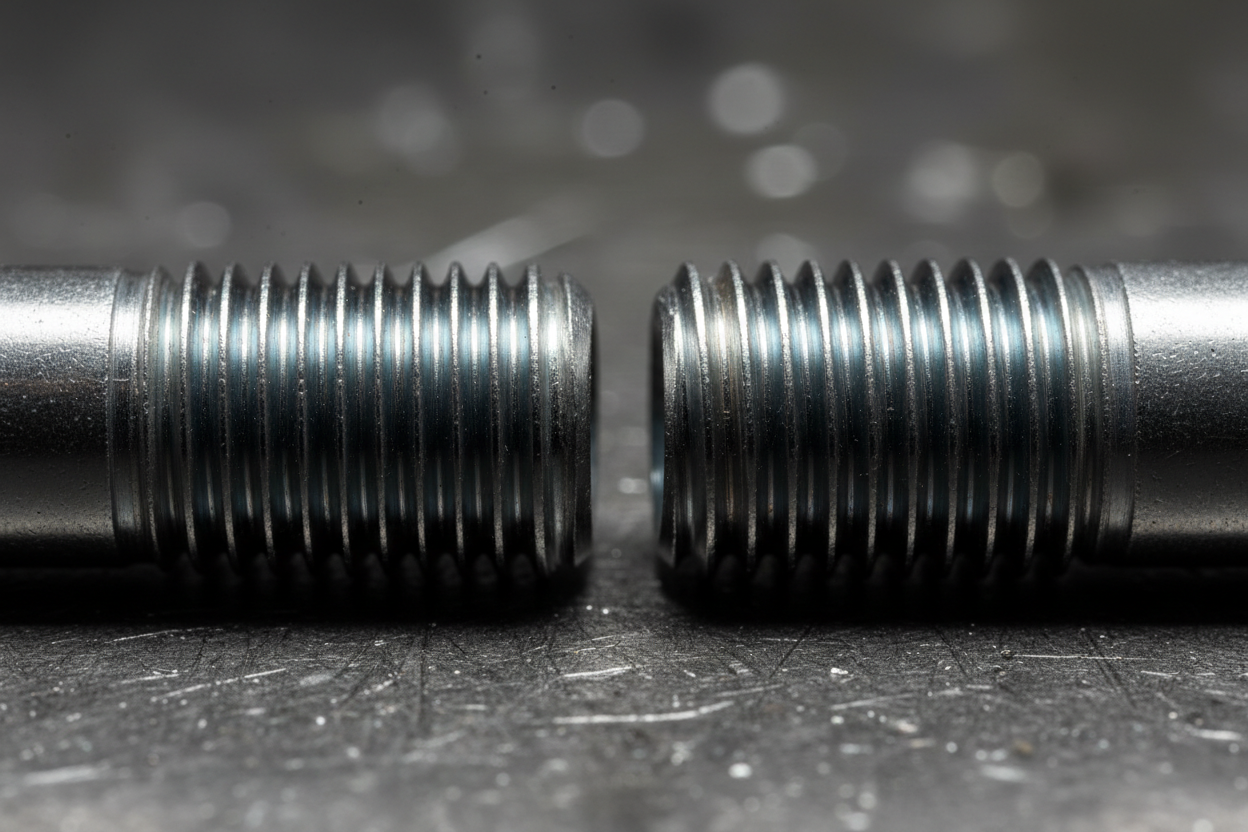
When working with fasteners, one of the most common questions is whether to use metric or SAE bolts. While they may look similar, they are not interchangeable and serve different standards.
In this guide, we'll break down the differences between metric and SAE bolts, how to identify them, and when to use each type.
What Are Metric Bolts?
Metric bolts are measured using the metric system in millimeters. They're the standard across most of the world and are commonly found in imported equipment, European machinery, and modern automotive applications.
Key characteristics:
- Measured in millimeters (mm)
- Thread pitch is the distance between threads
- Commonly used internationally
Example: M8-1.25 x 50mm
What Are SAE Bolts?
SAE bolts (Society of Automotive Engineers) follow the imperial measurement system and are the standard in the United States. You'll find them in most domestic equipment, construction applications, and general hardware.
Key characteristics:
- Measured in inches
- Thread pitch is measured in threads per inch (TPI)
- Commonly used in the United States
Example: 1/4"-20 x 2"
Metric vs SAE: Key Differences
The main differences come down to measurement systems and how thread pitch is calculated. Metric bolts use millimeters for everything, while SAE bolts use inches. This fundamental difference means they're not compatible with each other.
- Measurement System: Metric uses millimeters; SAE uses inches
- Thread Pitch: Metric measures distance between threads; SAE counts threads per inch
- Common Usage: Metric is international; SAE is primarily U.S.-based
- Labeling Format: Metric looks like M8-1.25; SAE looks like 1/4"-20
Can You Use Metric and SAE Bolts Together?
No—metric and SAE bolts are not interchangeable, even if they appear similar in size. Mixing them can lead to serious problems:
- Threads won't match properly
- Connections can fail under stress
- Components may be damaged during installation
Always match the system exactly to your application.
How to Identify Metric vs SAE Bolts
1. Measure the Diameter
- Metric bolts are measured in millimeters
- SAE bolts are measured in inches or fractions of inches
2. Check Thread Pitch
- Metric bolts show the distance between threads (e.g., 1.25mm)
- SAE bolts show threads per inch (e.g., 20 TPI)
3. Look at Head Markings
- Metric bolts often have grade numbers (e.g., 8.8, 10.9)
- SAE bolts use radial lines on the head (Grade 5 has 3 lines; Grade 8 has 6 lines)
When to Use Metric Bolts
- Imported equipment or machinery
- European or international applications
- Modern automotive projects
- Equipment manufactured outside the United States
When to Use SAE Bolts
- U.S.-manufactured equipment
- Construction and building applications
- General hardware and maintenance
- Older vehicles and machinery built in America
Common Mistakes to Avoid
- Mixing metric and SAE bolts in the same assembly
- Assuming similar sizes will fit together
- Skipping thread pitch verification
- Forcing mismatched fasteners into place
Choosing the Right Bolt System
The best choice depends on your specific application. Always:
- Match the existing hardware in your assembly
- Follow manufacturer specifications exactly
- Double-check measurements before ordering
- Verify thread pitch compatibility
Using the correct system ensures safety, proper performance, and prevents costly rework down the line.
Find the Right Fasteners for Your Project
Whether you need metric or SAE bolts, selecting the correct standard is essential for success. At BoltsandNuts.com, we stock both metric and SAE fasteners in a wide range of sizes, grades, and materials. Browse by diameter, thread type, grade, or material to find the exact match for your application.
Final Thoughts
Understanding the difference between metric and SAE bolts is key to avoiding costly mistakes and ensuring your projects run smoothly. While they may look similar at first glance, they are designed for different measurement systems and should never be mixed.
Always verify your measurements, check your specifications, and choose the correct standard for your application. When in doubt, consult the equipment manual or reach out to our team for guidance.