B&N Pro Membership

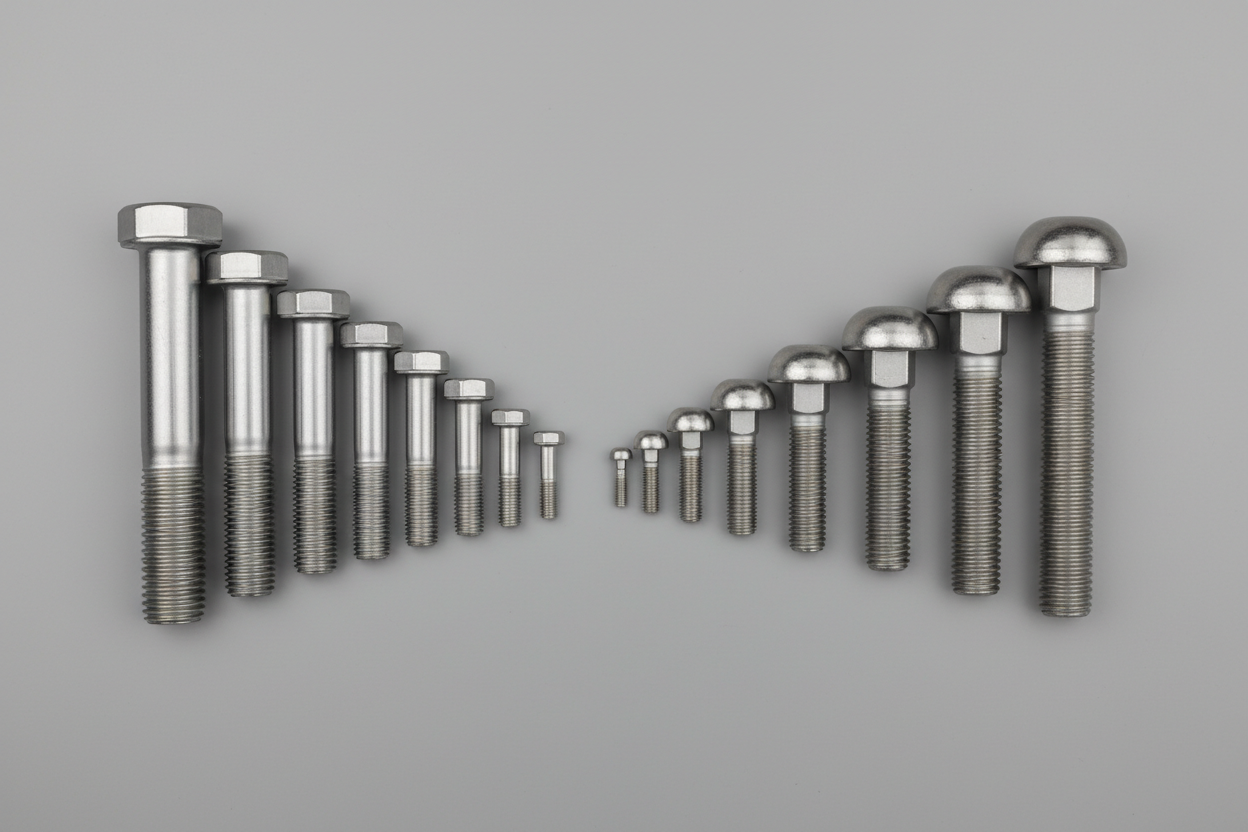
Choosing between hex bolts and carriage bolts can be confusing, especially if you're working on a DIY, hobby, or small machinery project. While both are common fasteners, they serve different purposes and are ideal for different applications. In this guide, we'll break down the key differences and help you select the right fastener for your job.
Hex Bolts: Strength and Versatility
Hex bolts are among the most widely used fasteners in industrial and commercial applications. Their six-sided head design makes them easy to grip with a wrench or socket, providing excellent torque control and reliability.
- Head shape: Hexagonal
- Installation: Wrench or socket required
- Best for: Metal assemblies, machinery, and structural applications where maximum holding power is critical
Advantages
- High tensile strength and load-bearing capacity
- Excellent grip with standard tools
- Available in numerous grades, materials, and sizes
- Suitable for both metal and wood applications
Limitations
- Exposed head may not suit aesthetic applications
- Requires appropriate wrench or socket size
Carriage Bolts: Clean Finish and Anti-Spin Design
Carriage bolts feature a distinctive rounded head paired with a square neck section beneath the head. This design prevents the bolt from spinning during installation—a critical advantage when working with wood or when access to the bolt head is limited.
- Head shape: Rounded with square neck
- Installation: Nut on the opposite side; no wrench needed on the head
- Best for: Wood construction, furniture, and applications where appearance matters
Advantages
- Smooth, finished appearance ideal for visible surfaces
- Square neck grips wood fibers, preventing rotation during tightening
- Requires only a wrench on the nut side
- Professional look for decorative and structural wood projects
Limitations
- Lower shear strength compared to hex bolts
- Less effective in metal-to-metal applications
- Requires pre-drilled holes for proper installation
Hex Bolt vs Carriage Bolt: Quick Comparison
| Feature | Hex Bolt | Carriage Bolt |
|---|---|---|
| Head Type | Hexagonal | Rounded with square neck |
| Primary Use | Metal and structural applications | Wood and decorative applications |
| Installation Method | Wrench or socket on head | Nut only; head stays stationary |
| Strength Rating | High | Moderate |
| Appearance | Industrial, exposed | Finished, professional |
Selecting the Right Bolt for Your Project
The choice between hex and carriage bolts comes down to three key factors:
- Material: Use hex bolts for metal assemblies and machinery; choose carriage bolts for wood construction and furniture.
- Strength requirements: Hex bolts deliver superior holding power for high-stress applications. Carriage bolts work well for moderate loads in wood.
- Appearance: If the fastener will be visible, carriage bolts provide a cleaner, more finished look. Hex bolts are ideal when aesthetics are secondary to function.
- Material grade: Both types are available in stainless steel, galvanized, and other corrosion-resistant finishes—select based on your environment.
Get the Right Fastener for Your Job
At Bolts and Nuts, we stock a comprehensive selection of hex bolts and carriage bolts in various sizes, materials, and grades. Whether you're building machinery, assembling furniture, or tackling a structural project, we have the fasteners you need to get the job done right.
Browse our inventory by type, material, size, and thread specification to find exactly what your project requires.
Final Thoughts
Both hex and carriage bolts are essential fasteners with distinct strengths. Hex bolts excel in high-strength, metal-based applications, while carriage bolts shine in wood projects and visible assemblies. Understanding these differences ensures you select the right fastener, avoid installation problems, and achieve a secure, professional result that lasts.